


Voltage Stabilizer vs. Over and Under Voltage Protector: What Is the Difference?
Introduction: Why These Two Devices Are Often Confused
In modern low-voltage distribution systems, protecting sensitive equipment from power grid abnormalities is a primary concern for facility managers, electrical engineers, and residential users. During extreme weather events, sudden load changes in the power grid, or local transformer failures, a common but highly destructive situation may occur: household appliances, HVAC compressors, or industrial control panels may suddenly burn out, while the thermal-magnetic circuit breaker in the distribution board does not trip. When investigating the root cause of this type of equipment failure, people often discover a fundamental misunderstanding of switching and protection devices. Traditional miniature circuit breakers, also known as MCBs, are designed entirely based on the operating principles of thermal and magnetic effects. They are mainly used to detect overcurrent and short-circuit faults, so they cannot detect dangerous fluctuations in the supply voltage. When the utility grid continuously produces overvoltage surges or severe undervoltage drops, a standard circuit breaker may not detect any overcurrent at the beginning. As a result, it may allow destructive voltage waveforms to pass directly to downstream loads.
Facing serious economic losses caused by hardware damage, system designers and end users are actively looking for voltage protection solutions. This inevitably leads them into a complex market full of overlapping technical terms. Search queries often mix terms such as “voltage stabilizer,” “automatic voltage regulator (AVR),” “surge protector,” and “over and under voltage protector,” making it difficult for people to clearly understand which device is actually needed to solve a specific power grid abnormality. This common confusion comes from one simple fact: voltage stabilizers and over and under voltage protectors share the same final goal, which is to protect connected electrical loads from destructive physical and thermal effects caused by unstable power supply. However, in terms of engineering concept, internal electromechanical mechanism, and real application environment, these two devices are fundamentally different.
The core operating difference between these two technologies can be summarized by looking at how each device interacts with the incoming power supply. A voltage stabilizer is designed to continuously regulate voltage. It actively absorbs input voltage fluctuations and outputs a corrected, highly stable waveform to ensure uninterrupted operation. In contrast, an over and under voltage protector uses a passive monitoring method. Its purpose is to disconnect the power supply when the voltage becomes unsafe, physically isolating the load from the grid until normal conditions are restored.
Understanding the complex electrical principles behind these two fundamentally different methods is essential for selecting the right switching and protection device. Choosing the wrong device may result in insufficient system protection, which can cause severe overheating damage to induction motors, or lead to unnecessary investment in expensive voltage regulation equipment when a simple disconnecting protection device would actually be enough. This guide explains the differences between these devices and helps you determine which one is more suitable for your electrical system. If you need a deeper understanding of the working principles and wiring methods, please read our over and under voltage protector guide to learn how these devices can be integrated into broader distribution networks.
What Is a Voltage Stabilizer?
A voltage stabilizer, often referred to as an automatic voltage regulator (AVR) in industrial power literature, is an electromechanical or solid-state power regulation device designed to provide a constant output voltage to the load, regardless of significant, transient, or long-term fluctuations in the input utility power supply.
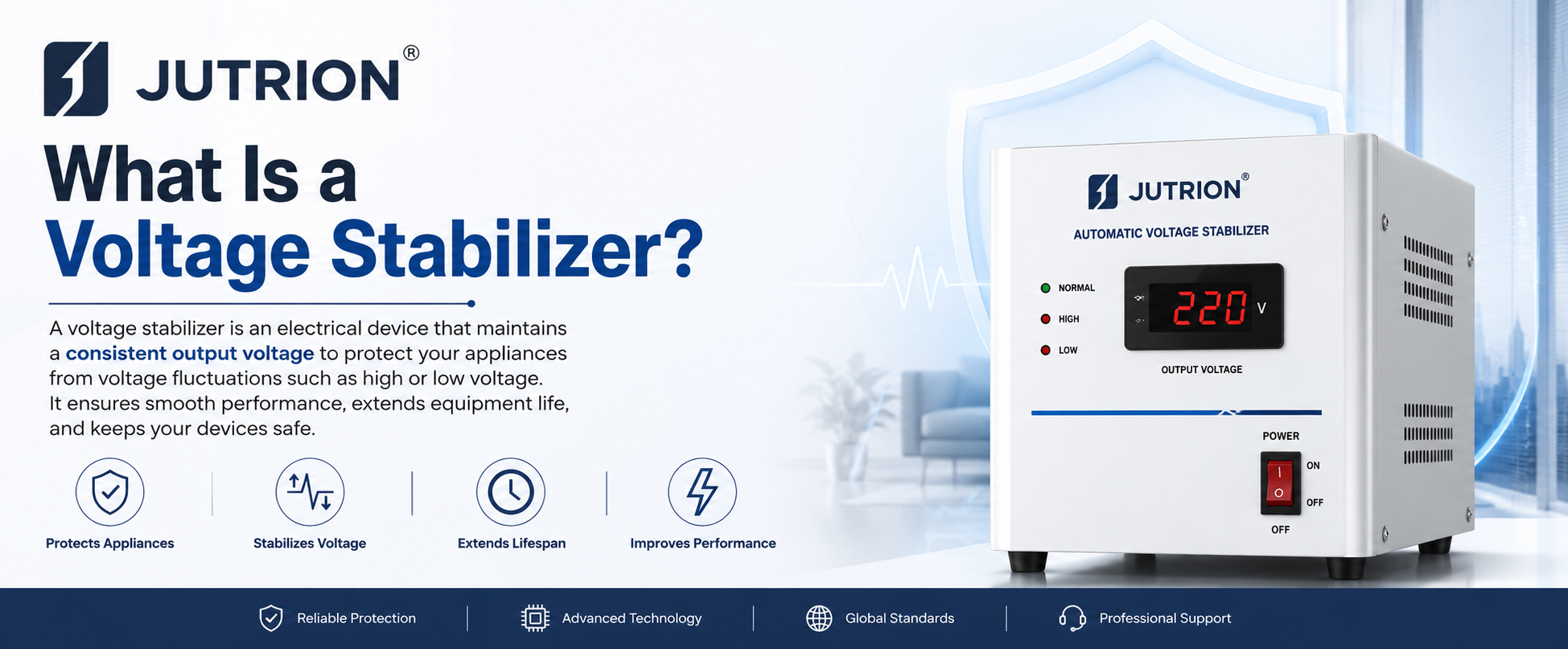
According to IEC 60038:2009, the nominal supply voltage for low-voltage AC systems is typically defined as 230V for single-phase systems and 400V for three-phase systems, with a working frequency of 50Hz and a standard normal operating condition tolerance of ±10%. In practical terms, this framework means that a standard 230V utility grid may fluctuate within a legal and normal range, with a minimum voltage of 207V and a maximum voltage of 253V. However, in areas with weak grid infrastructure, very long overhead distribution lines, or heavy industrial switching loads, the supply voltage can easily drop below 170V or dangerously rise above 270V. A voltage stabilizer continuously monitors this unstable and non-compliant input voltage and uses its internal transformer and switching topology to “step up” excessively low input voltage or “step down” excessively high input voltage. The main goal is to ensure that the output voltage remains consistently close to the nominal target value of 230V, allowing sensitive equipment to operate continuously and smoothly without interruption.
From the perspective of overall system design, it must be clearly stated that a voltage stabilizer is only a voltage correction device. It is not a main safety isolation switch, nor is it designed to prevent residual current leakage, catastrophic short-circuit faults, or large-scale overcurrent conditions. It can correct voltage amplitude, but it still needs to work together with other protective switching devices to handle current-based faults.
How Does a Voltage Stabilizer Regulate Voltage?
The internal structure and switching topology of a voltage stabilizer determine its response time, output accuracy, and suitable application environment.
In the field of electrical engineering, voltage regulation is mainly achieved through three different operating topologies:
Relay-Type Voltage Stabilizer
A relay-type voltage stabilizer is a traditional multi-tap voltage regulation solution. It uses a microcontroller to compare the input voltage with an internal reference value. When the voltage deviation exceeds the preset limit, the controller drives relays to switch between different transformer winding taps, adjusting the voltage in discrete steps. Its voltage regulation accuracy is typically around ±5% to ±10%.
It features low cost, fast switching speed of about 30–40 ms, and strong short-term overload capacity, making it suitable for surge-current scenarios such as motor startup. However, its mechanical contacts are prone to wear and oxidation, so its service life is generally shorter than that of solid-state relay solutions.
Servo Motor-Type Voltage Stabilizer
A servo motor-type voltage stabilizer uses an autotransformer and carbon brush continuous voltage regulation solution. The control circuit detects voltage deviation and drives the servo motor to move the carbon brush, changing the contact point on the winding. This allows the turns ratio to be adjusted smoothly, achieving high-precision voltage stabilization of about ±1% to ±3%. It can reach an efficiency of over 98% and correct large grid voltage fluctuations of up to ±50%.
It offers high voltage regulation accuracy and continuous output, making it suitable for industrial applications. However, due to mechanical delay, its response time ranges from milliseconds to seconds, making it difficult to handle sudden voltage changes. In addition, the carbon brush is prone to wear and requires regular maintenance and replacement.
Static / Solid-State Voltage Stabilizer
A static, or solid-state, voltage stabilizer is an advanced voltage regulation solution with no mechanical moving parts. It uses IGBT/SCR power electronic components and PWM control algorithms to directly boost or reduce the voltage waveform for compensation. This enables microsecond-level response and ultra-high voltage regulation accuracy of about ±1%. It operates quietly and requires almost no maintenance.
It offers fast response, high accuracy, and strong capability to handle extreme voltage fluctuations. However, due to its complex semiconductor architecture and cooling requirements, the cost is relatively high. It is commonly used in critical applications such as data centers, medical equipment, and precision industrial automation systems.
Common Applications of Voltage Stabilizers
In areas with weak power infrastructure, such as rural regions, agricultural zones, or locations at the end of long distribution lines, voltage drop is a common problem. Long cable distances, high line impedance, and insufficient transformer capacity can cause the supply voltage to remain low for long periods. In this situation, a voltage stabilizer can raise the input voltage to a usable level, for example stabilizing around 180V to close to 230V, so that refrigerators, air conditioners, pumps, and other equipment can operate normally.
Industrial equipment requires even more stable voltage. Three-phase induction motors are widely used in industrial machinery, HVAC compressors, and agricultural pumps. When these motors operate under low voltage for a long time, they draw higher current to maintain output power, which can lead to winding overheating, current fluctuation, and shorter insulation life. A voltage stabilizer helps provide a more stable rated voltage, reducing overheating and abnormal wear while improving operating reliability.
Medical, laboratory, and precision manufacturing equipment also require stable power. Equipment such as MRI systems, mass spectrometers, and CNC machines is sensitive to voltage fluctuation and waveform quality. Unstable voltage may cause measurement errors, abnormal data, tool vibration, or even damage to expensive equipment. In these applications, a voltage stabilizer is not only used to protect equipment, but also to support process accuracy and continuous operation.
What Are Overvoltage and Undervoltage Protectors?
A voltage stabilizer actively compensates for grid voltage fluctuations to keep equipment running continuously. An overvoltage and undervoltage protector works in a completely different way: it protects the circuit by physical disconnection.An overvoltage and undervoltage protector is a dedicated monitoring and safety disconnection device. It is installed directly in low-voltage distribution systems or user-side electrical panels. Its main function is to continuously monitor the input voltage. When the voltage exceeds the preset upper or lower safety limit, the internal relay is triggered automatically, cutting off power to the downstream load.Unlike a UPS or a standard voltage stabilizer, a voltage protector does not try to correct, boost, reduce, or filter the input power supply. It plays a strict safety-switching role. For example, if a faulty transformer neutral causes a dangerous voltage rise to 350V, the protector will not absorb or correct the voltage. It simply disconnects the circuit, keeping downstream equipment safely isolated before insulation breakdown, fire, or equipment damage can occur.
How an Overvoltage and Undervoltage Protector Works
Modern overvoltage and undervoltage protectors are mainly composed of a voltage detection circuit, a microcontroller, and an internal relay.The device continuously monitors the RMS value of the input AC voltage and compares it with the preset safe operating range. For example, the undervoltage limit may be set at 170V, while the overvoltage limit may be set at 270V. When the grid voltage goes beyond this range, the microcontroller immediately sends a signal to the internal relay.After receiving the signal, the relay quickly disconnects the circuit and cuts off power to the downstream load. Some protectors can also disconnect the neutral line, depending on the product structure and wiring method.The key function of an overvoltage and undervoltage protector is not to correct or stabilize the voltage, but to disconnect the power quickly when voltage becomes unsafe. This helps prevent abnormal voltage from entering the equipment and reduces the risk of damage to circuit boards, LED drivers, motors, and household appliances.
For a deeper explanation of how overvoltage and undervoltage protectors work and where they are used, please see our dedicated guide on overvoltage and undervoltage protectors.
Main Difference: Regulating Voltage vs Disconnecting Unsafe Voltage
The theoretical foundations and physical components of both devices dictate their deployment strategies within a power distribution network. To synthesize the engineering disparity into a single defining axiom: A voltage stabilizer is designed to regulate voltage, while an over and under voltage protector is designed to disconnect the power supply when the voltage becomes unsafe.
Voltage Stabilizer: Continuous Voltage Correction
When an electrical system is supported by a voltage stabilizer, the primary objective is operational uptime and process continuity. The load is shielded from the chaotic nature of the utility grid because the stabilizer acts as an active, buffering intermediary. If the grid drops to 190V, the stabilizer internally boosts the voltage to 230V. The connected equipment—whether it be a life-saving surgical ventilator, a massive server rack, or a residential freezer—never experiences the 190V sag and, crucially, never loses power. The downside to this active correction methodology is that the internal transformers required to manipulate the voltage are physically heavy, take up substantial physical footprint, and generate internal heat (eddy currents and copper losses) that must be managed, contributing to significantly higher upfront capital costs and ongoing operational energy consumption.
Voltage Protector: Cut-Off Protection During Abnormal Voltage
When an electrical system relies on an over and under voltage protector, the primary objective shifts drastically from operational uptime to absolute equipment preservation. The protector makes absolutely no effort to correct the incoming 190V sag. If the lower limit threshold is configured at 200V, the device will immediately sever the connection upon detecting the 190V supply. The connected equipment immediately loses power and ceases operation. While this results in operational downtime, it completely eliminates the risk of thermal degradation in induction motors or dielectric breakdown in power supplies. Because protectors do not contain massive copper transformer windings, they are incredibly compact (usually occupying only 2 to 3 standard DIN rail modules), generate negligible internal heat, and are highly cost-effective to procure and deploy.
Comparison Table
To facilitate clear technical specification and procurement analysis, the fundamental differences between the two technologies are mapped in the following matrix:
| Technical Parameter | Voltage Stabilizer (AVR) | Over and Under Voltage Protector |
| Core Functionality | Continuously corrects and regulates fluctuating voltage. | Monitors voltage and disconnects power during dangerous anomalies. |
| Output to Load | Delivers a stable ≈ 230V regardless of input variations. | Delivers the exact same voltage as the grid; alters nothing. |
| Power Interruption | Ensures continuous operation without cutting power. | Instantly cuts power to the load when thresholds are breached. |
| Automatic Restoration | N/A (Power is actively maintained, not lost). | Self-reclosing mechanism restores power after a programmed delay. |
| Physical Size & Volume | Bulky, heavy, often requires floor mounting or large racks. | Highly compact, mounts directly onto standard 35mm DIN rails. |
| Cost Profile | High initial capital expenditure; incurs continuous energy losses. | Highly economical; negligible energy consumption. |
| Primary Use Case | Weak grids, continuous industrial processes, medical equipment. | Home distribution boards, commercial lighting, HVAC compressor protection. |
Can a Voltage Protector Replace a Voltage Stabilizer?
Because overvoltage and undervoltage protectors are cheaper, lighter, and easier to install than full-function voltage stabilizers, purchasing managers and electrical contractors often ask whether a protector can completely replace a stabilizer in system design.
From an engineering perspective, the answer is no. An overvoltage and undervoltage protector cannot fully replace a voltage stabilizer because it does not correct voltage fluctuations. It only disconnects the circuit when the voltage exceeds the safe operating range.
When It Cannot Replace a Voltage Stabilizer
If a manufacturing plant or residential area is located at the far end of a rural distribution network, the utility voltage may remain around 180V to 190V during peak load hours. In this situation, if an overvoltage and undervoltage protector is installed and the undervoltage threshold is set to 200V, the facility may lose power continuously.
The protector will detect 190V and correctly identify it as an unsafe undervoltage condition, then disconnect the circuit. It will never complete its automatic reclosing process because the grid voltage does not naturally return to the “healthy” 230V range.
In cases where the voltage remains low for a long time, equipment must stay powered to maintain living conditions or production income. At this point, a voltage stabilizer becomes the only practical engineering solution. The stabilizer accepts the weak 190V input and dynamically boosts the output voltage to around 230V, allowing the facility to continue operating even when the utility supply is poor.
In addition, if the load consists of high-power induction motors, the physical effect of low voltage cannot be ignored. When terminal voltage drops, magnetic flux decreases, forcing the motor to draw higher current to maintain torque. This current can cause serious I²R heat losses and reduce the insulation performance of the motor windings. If the process cannot be stopped, such as an industrial cooling pump, cutting off power through a protector is not acceptable. In this case, the voltage must be stabilized.
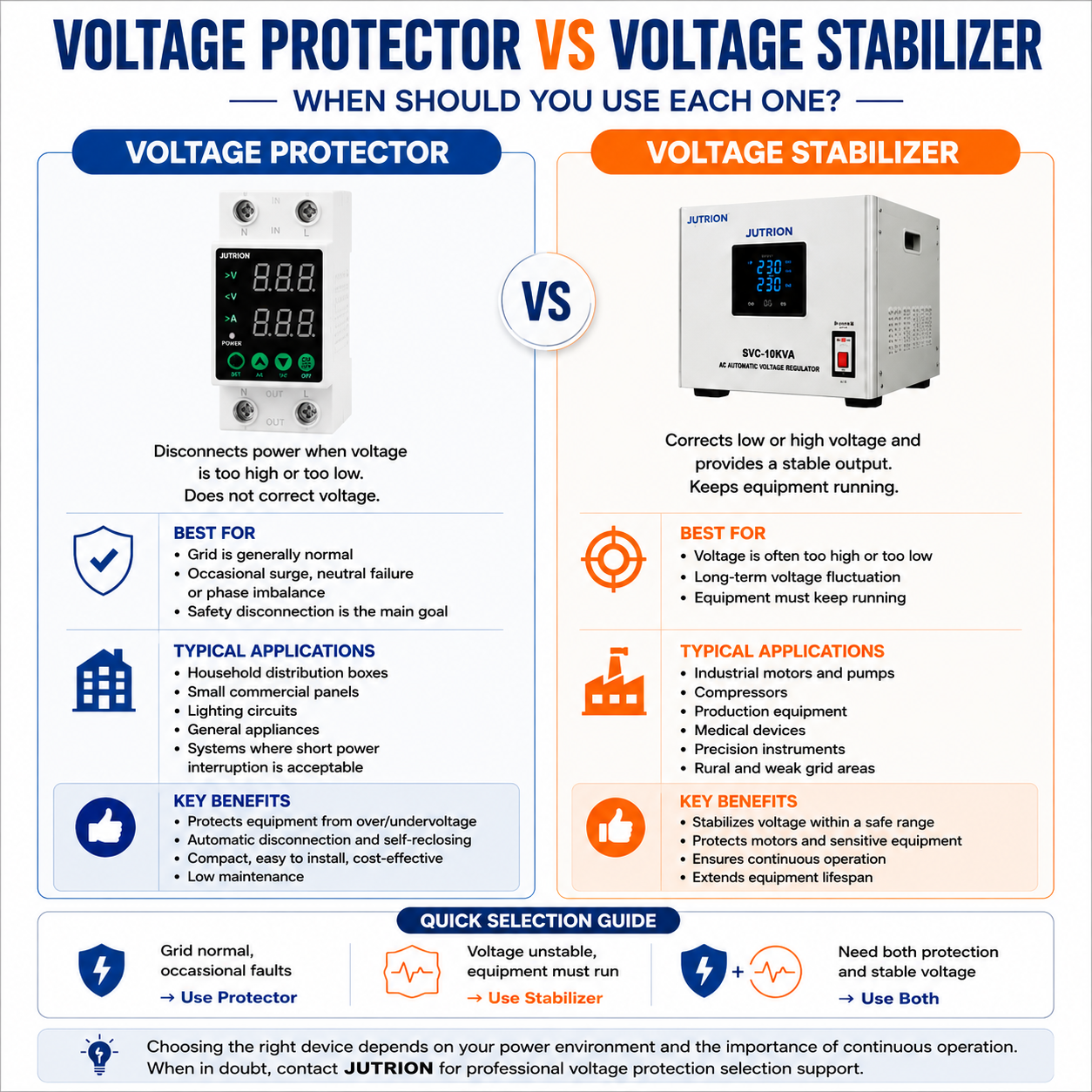
Voltage Protector vs Voltage Stabilizer: When Should You Use Each One?
The choice depends on one key question: does the load need to keep running during voltage fluctuation, or should it be disconnected for safety?
A voltage stabilizer is suitable when the equipment must continue operating even if the grid voltage is unstable. It actively corrects low or high input voltage and provides a more stable output voltage. This makes it a better choice for rural power networks, industrial motors, pumps, compressors, production equipment, medical devices, and precision instruments.
An overvoltage and undervoltage protector is suitable when the main goal is safety disconnection. It does not correct voltage. Instead, it cuts off the power when the voltage becomes too high or too low. This makes it suitable for household distribution boxes, small commercial panels, lighting circuits, general appliances, and systems where temporary power interruption is acceptable.
In simple terms, use a voltage stabilizer when the equipment must keep running; use an overvoltage/undervoltage protector when unsafe voltage should be disconnected immediately.
The table below provides a simple selection guide based on different voltage conditions and application requirements.
Scenario | Recommended Device |
The grid is generally normal, but you want protection against lightning surges or neutral line failure | Overvoltage and Undervoltage Protector |
The voltage stays too high or too low for a long time, and the equipment cannot operate normally | Voltage Stabilizer |
You need both surge protection and long-term voltage stabilization | Voltage Stabilizer + Overvoltage and Undervoltage Protector |
Final Selection Advice
Dealing with protection in low-voltage networks requires matching the specific electrical abnormality of the local grid with the operating tolerance of the connected equipment. The decision can be simplified into a clear, result-based rule.
If the power environment has long-term weak grid conditions, severe voltage drop at the end of distribution lines, or continuous voltage fluctuation, and the facility operates critical heavy machinery or precision medical equipment that requires uninterrupted power, then a voltage stabilizer is an essential engineering choice. It actively regulates and corrects the voltage waveform, ensuring that the equipment can continue operating even when the utility supply is unstable. This helps prevent motor damage and maintain the continuous operation of critical processes.
On the other hand, if the grid is generally stable but occasionally experiences neutral line failure, lightning-induced voltage rise, or sudden phase imbalance, and the main goal is to protect household appliances, commercial LED lighting, or HVAC compressors in a compact and cost-effective way, then an overvoltage and undervoltage protector is usually the better solution. For many residential and small commercial distribution panels, a self-reclosing overvoltage and undervoltage protector provides compact, economical, and efficient protection against abnormal voltage. It requires almost no maintenance, can be integrated easily into existing consumer units, and uses automatic reclosing delay logic to restore power when voltage returns to normal. At the same time, it helps protect compressor systems from the impact of locked-rotor startup conditions.
Selecting the proper rated current, delay time, and voltage threshold is critical to the overall performance and safety of the installation.
Please contact JUTRION for voltage protection selection support to ensure that the selected device fully matches the structural requirements of your specific distribution network.
FAQs
Is a voltage stabilizer the same as an over and under voltage protector?
No, they are entirely different devices. A voltage stabilizer is an active regulatory device designed to continuously correct abnormal input voltages to provide a stable, constant output voltage without interrupting power to the load. An over and under voltage protector is a passive monitoring device designed to simply disconnect the power supply when it detects dangerous voltage levels, physically isolating the equipment until the grid returns to a safe state.
Do I need both a voltage stabilizer and a voltage protector?
In some advanced, mission-critical, or highly sensitive industrial applications, utilizing both devices provides layered, comprehensive protection. The voltage stabilizer manages minor to moderate continuous fluctuations, maintaining precise operational voltage for the equipment. However, if an extreme, catastrophic voltage spike occurs that wildly exceeds the stabilizer's maximum operational and clamping limits, a voltage protector installed upstream acts as the ultimate fail-safe, cutting power entirely to save both the expensive stabilizer and the downstream equipment from destruction.
-
Selection and Installation Guide for SPDs in Solar PV Systems
2026-05-16 12:54:43 -
Voltage Stabilizer vs. Over and Under Voltage Protector: What Is the Difference?
2026-05-14 14:37:10 -
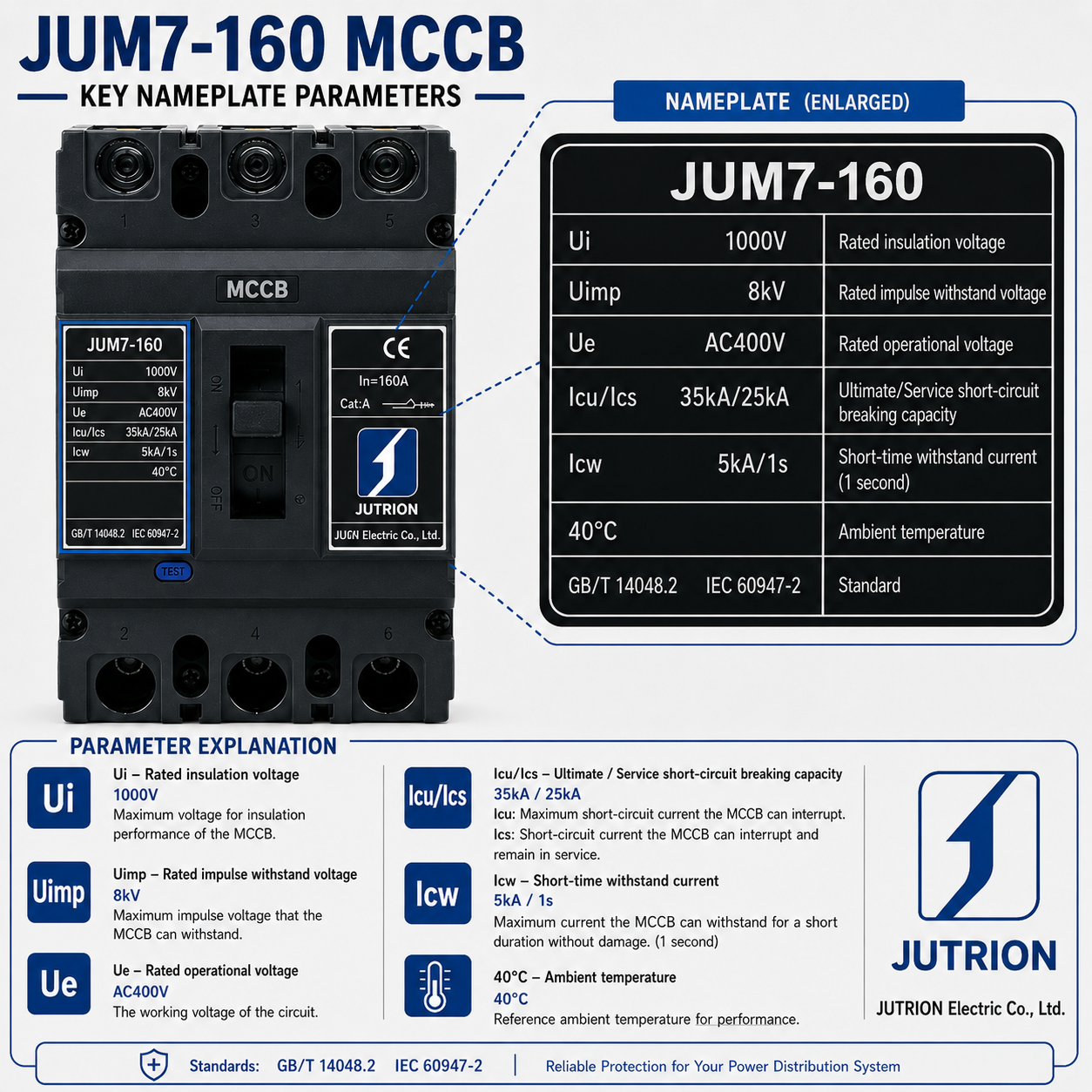
Confused by Icu, Ics and Icw? A Complete Guide to Understanding MCCB Nameplate Ratings
2026-05-12 17:31:01 -
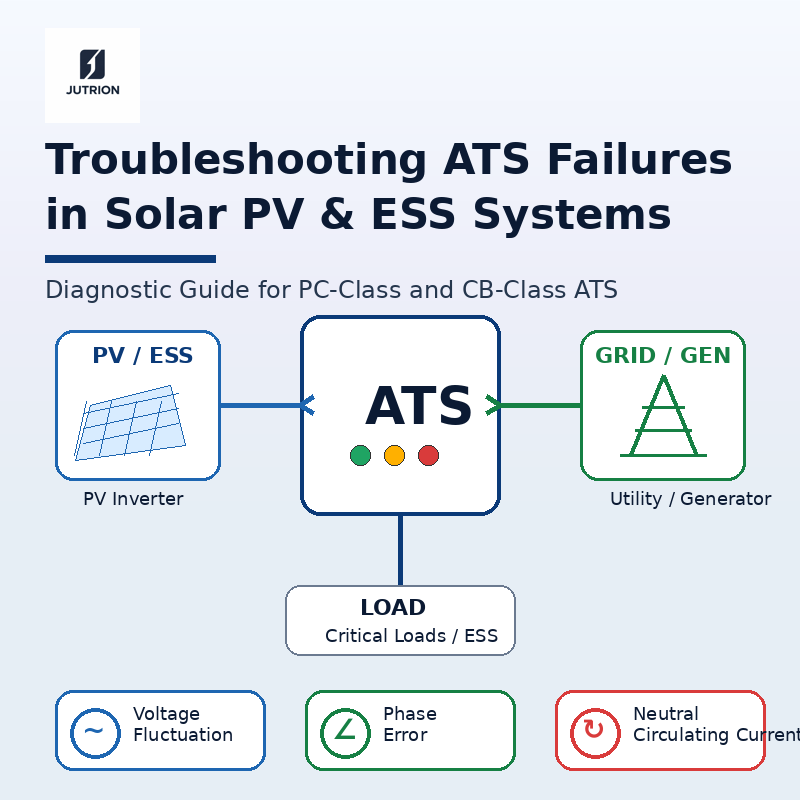
How to Troubleshoot PC-Class and CB-Class ATS Failures in Solar PV and Energy Storage Systems?
2026-05-10 17:04:51 -
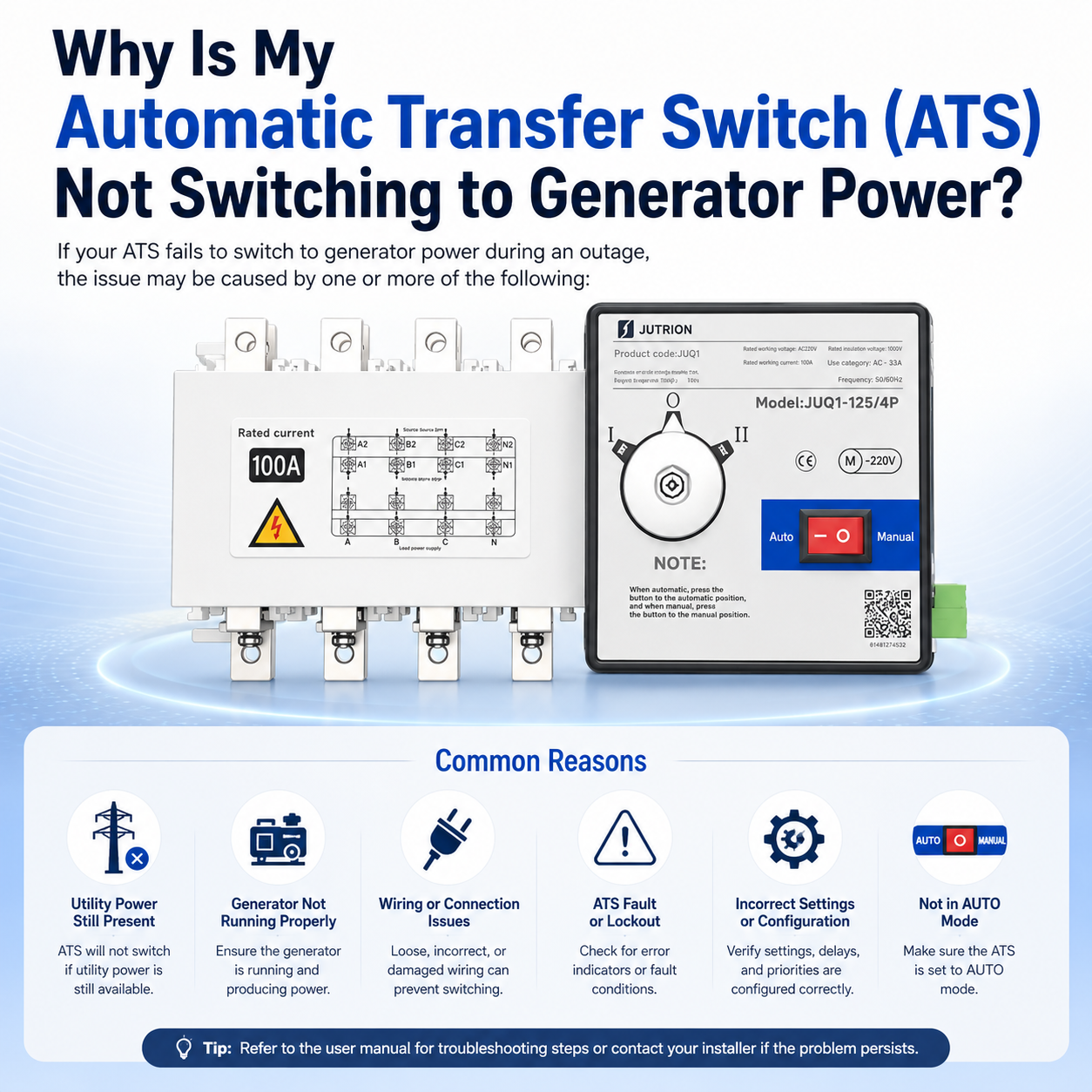
Why is My Automatic Transfer Switch (ATS) Not Switching to Generator Power?
2026-05-07 22:31:27