



Confused by Icu, Ics and Icw? A Complete Guide to Understanding MCCB Nameplate Ratings
Misinterpreting Icu, Ics, and Icw on an MCCB nameplate can lead to major system risks. These ratings are crucial for both short-circuit protection and the speed of power recovery.
Why does Ics matter for uninterrupted power? What are the benchmarks for high-quality MCCBs? We’ll break down these essential parameters to help you make a professional, data-driven choice for your next project.
Summary of Key Points:
When selecting an MCCB (Molded Case Circuit Breaker), many people overlook the more critical short-circuit performance ratings on the nameplate: Icu, Ics, and Icw.
Let’s take a closer look at what Icu, Ics, and Icw mean on an MCCB nameplate.
- MCCB selection should be based on short-circuit current, service continuity, selectivity, voltage, current and application environment.
For a more complete selection process, you can also read our MCCB Selection Guide to compare current ratings, breaking capacity, voltage, application environment and installation requirements.
What Are Icu, Ics and Icw on an MCCB Nameplate?
To help you quickly distinguish between these three critical ratings, I’ve summarized the key differences in the comparison table below. Understanding these can save you from costly replacement errors.
Parameter | Full Name | Simple Meaning | Why It Matters |
Icu | Rated ultimate short-circuit breaking capacity | Maximum fault current the MCCB can interrupt | Determines extreme short-circuit protection |
Ics | Rated service short-circuit breaking capacity | Fault current the MCCB can interrupt and still remain usable | Determines reliability after fault clearing |
Icw | Rated short-time withstand current | Current the breaker can withstand for a short time | Important for selectivity and delayed tripping |
What Is Icu in MCCB?
Core Definition: It is the “lifeline limit” of the circuit breaker
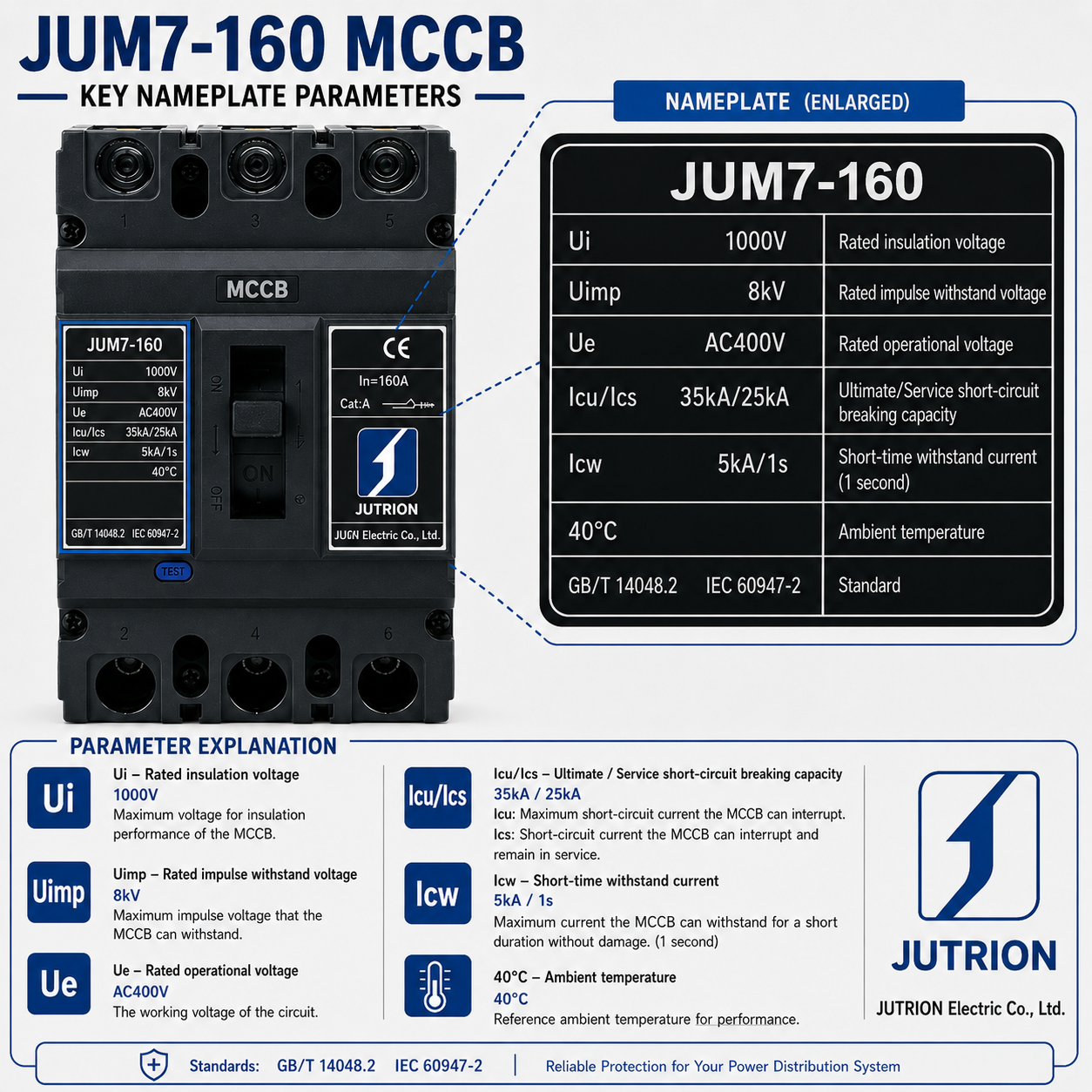
Icu stands for Rated Ultimate Short-Circuit Breaking Capacity. In simple terms, it is the maximum current that a circuit breaker can interrupt under specific test conditions, usually following the O-t-CO operating sequence.
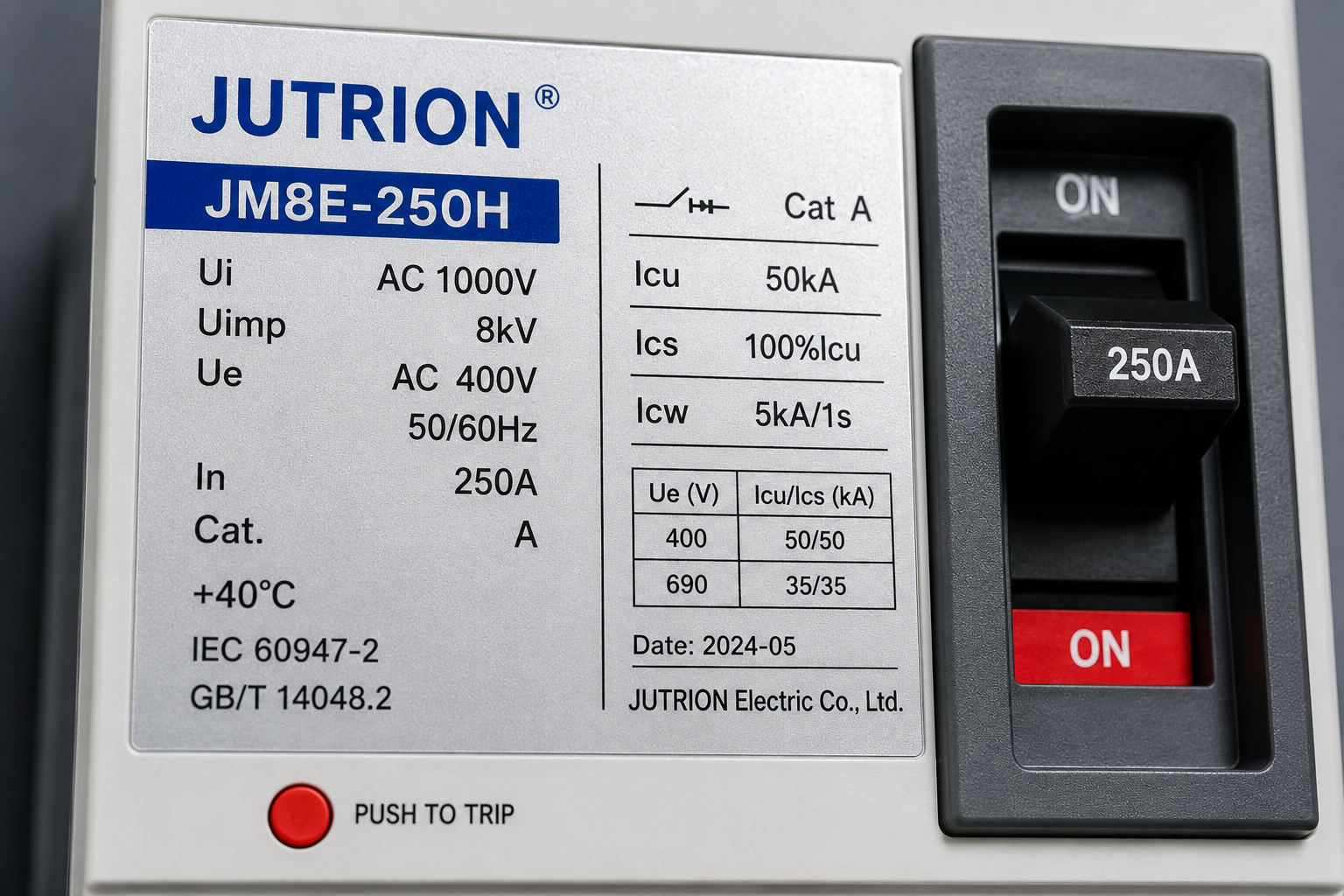
Figure 1: Close-up of a standard MCCB nameplate.
Expert View:
“Ultimate” means this is usually a one-time extreme breaking capacity. After interrupting a fault current at this level, the circuit breaker may have protected the downstream equipment and cables, but its internal contacts may already be seriously burned or damaged.As an industry recommendation, after an Icu-level short-circuit operation, the switch should be thoroughly inspected or replaced directly.
Common Icu Values and Market Standards
In different application scenarios, you will see different Icu ratings. Common values include:
- 25kA / 36kA: Commonly used for branch circuits in residential buildings and small commercial buildings.
- 50kA / 70kA: Standard configurations for industrial plants, data centers, and main switches in distribution panels.
- 100kA and above: Used in extreme power environments, such as busbar systems close to large-capacity transformers or heavy industrial applications.
Selection Pitfall: Why Is a Higher Icu Not Always Better?
Many customers fall into “number worship” when selecting an MCCB, believing that a higher rating always means better safety. In reality, this is not always true:
- Prospective short-circuit current at the installation point:
MCCB selection must be based on the calculated short-circuit current of the electrical system. If the maximum short-circuit current at the installation point is only 15kA, choosing a 100kA MCCB would be a serious waste of budget.
- Cost and size:
As the Icu rating increases, the product size, arc-extinguishing system complexity, and purchasing cost will also increase significantly. - System coordination:
Selection should also consider the system voltage, such as 415V vs 690V, and the application scenario. In PV systems, the characteristics of DC short-circuit current are completely different from AC systems, so simply checking the AC Icu rating is not enough.
What Is Ics in MCCB?
If Icu is designed to “save the system,” then Ics (Rated Service Short-Circuit Breaking Capacity) is designed to “protect production continuity.”
- Core logic:
Icu tells you whether the circuit breaker can interrupt a severe fault, while Ics tells you whether the system can recover more quickly after the fault. - Deeper meaning:
According to the standard, after interrupting a short-circuit current during the Ics test, the circuit breaker must still be able to carry its rated current normally.
Understanding the Ics/Icu Ratio
To reduce costs, many manufacturers design Ics at only 50% or 75% of Icu. According to the IEC 60947-2 international standard, the Ics ratio directly reflects the stability of the circuit breaker after multiple short-circuit interruptions.
Ics Ratio | Meaning | Practical Impact |
Economy Ratio | Economical standard | After tripping under a high fault current, the circuit breaker has a higher risk of internal damage and is usually recommended to be replaced. |
Standard Ratio | Standard type | Provides better impact resistance and is suitable for general power distribution applications. |
Full Capacity | Industrial-grade standard | Highest reliability. Even after a short circuit within the maximum designed range, the breaker can still be closed and continue operating after the fault is cleared, without replacing the device. |
JUTRION Recommendation:
For applications that are highly sensitive to downtime, such as hospitals, data centers, or fully automated factories, it is recommended to choose an MCCB with full service capacity (Ics matches Icu).
What Is Icw? When Is It Important?
In MCCB selection, Icw (Rated Short-Time Withstand Current) is not a parameter that must be maximized in every application. If you blindly require a high Icw rating without distinguishing the actual application, it often leads to unnecessary cost.
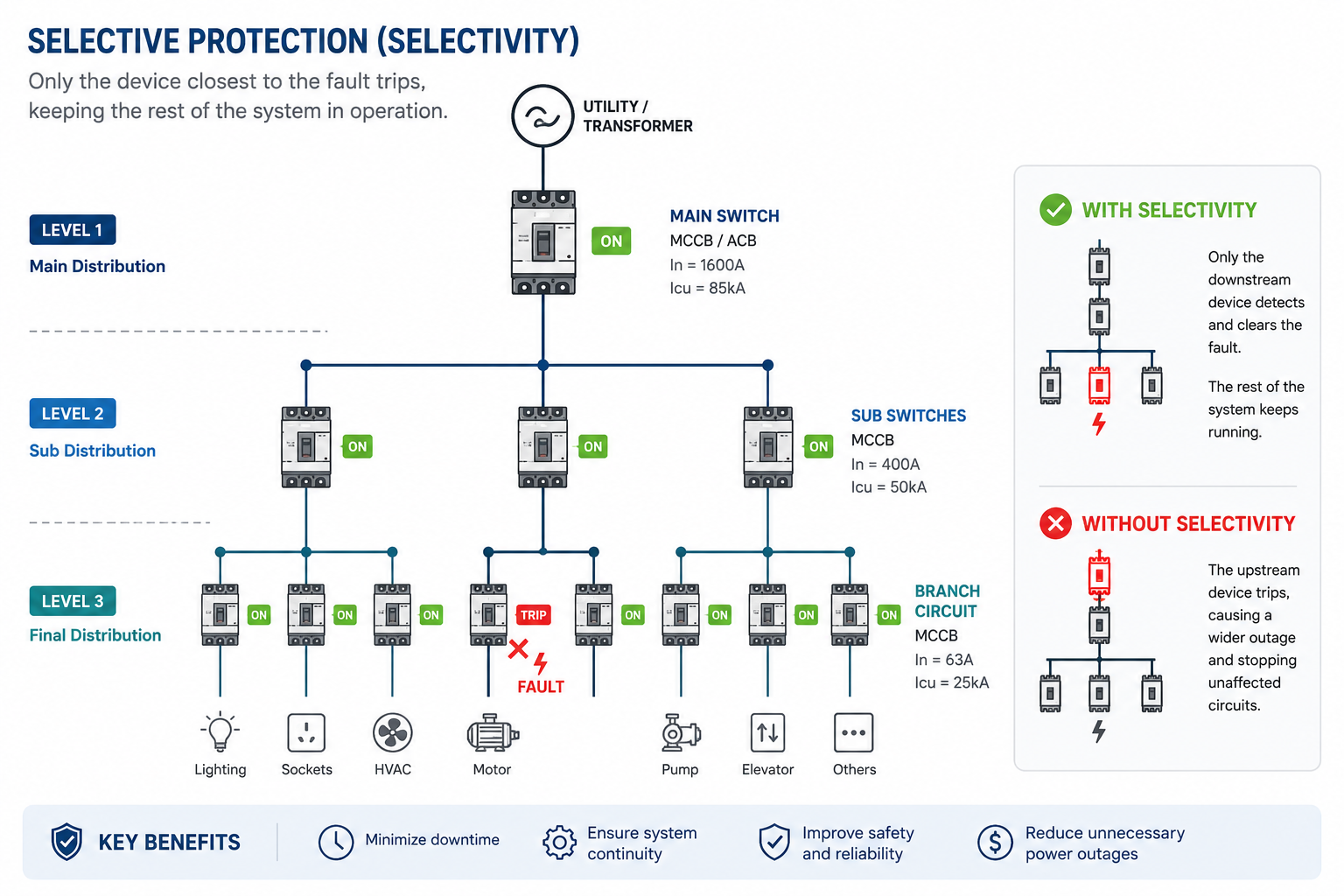
Figure 2: Understanding Selective Protection (Selectivity) in MCCB Systems.
- When should you pay attention to Icw?
More accurately, Icw becomes a key parameter in supplementary systems that require selective protection or short-time delay protection. For general final circuit protection, Icu and Ics are usually enough. - Core concept: What is selective protection?
Simply speaking, selective protection does not mean that every breaker trips whenever a fault occurs. Instead, through proper parameter coordination, the breaker closest to the fault point should trip first.
Expert explanation:
If a socket circuit in your building has a short circuit, ideally only the socket circuit breaker should trip, instead of causing the main switch of the entire floor to trip as well.
- Practical application scenarios of Icw:
- Upstream and downstream coordination:
Commonly used in backup protection designs where an ACB (Air Circuit Breaker) is used as the primary switch and an MCCB is used as the secondary switch. The upstream breaker must have a certain Icw withstand capability so it can “hold” for a short moment during a short circuit, allowing the downstream breaker to complete the interruption first. - Main distribution cabinet design:
In the main distribution cabinets of factories or commercial complexes, the main switch requires extremely high reliability to prevent a fault from expanding and causing a complete power outage. - Critical load applications:
In systems such as medical facilities, fire elevators, or key production lines, the equipment can withstand short-time short-circuit impact through its Icw carrying capability, while still ensuring power continuity in non-fault areas.
Icu vs Ics vs Icw: Key Differences
To help you quickly compare them in real projects, the following table summarizes the key differences between these three parameters in terms of breaking capacity, system recovery, and application scenarios.
| Item | Icu | Ics | Icw |
Main Focus | Maximum breaking capacity | Service breaking capacity | Short-time withstand ability |
Related To | Extreme short-circuit interruption | Continued use after fault | Selective protection |
Common Unit | kA | kA or Ratio of Icu | kA / time |
Important For | Safety limit | Reliability | Coordination |
Typical Concern | Can it interrupt the fault? | Can it still be used after fault? | Can it withstand delay before tripping? |
How to Choose the Right MCCB Based on Icu, Ics, and Icw
MCCB selection is not only about choosing a higher rating. It is a balance between safety and cost. As an expert with more than 10 years of industry experience, I recommend following these 4 steps for accurate selection:
1.Check the Prospective Short-Circuit Current at the Installation Point
Your Icu must be greater than or equal to the maximum short-circuit current that may occur at that location. If you are not sure about this value, it usually needs to be calculated based on the transformer capacity and cable length.
2.Select the Ics Rating Based on Power Continuity Requirements
For critical applications, it is recommended to choose an MCCB where the Ics rating matches the Icu rating to ensure maximum system continuity.
3.Consider Icw for Selective Protection
For the main switch beside your main distribution cabinet, you need to consider whether Icw is required to achieve upstream and downstream protection coordination. Icw becomes truly important only in selective systems where “a branch fault should not trip the main circuit.”
4. Match the Voltage, Current, and Special Application Environment
Finally, verify the rated operational voltage (Ue) and rated current (In). If the MCCB is used in extremely high-temperature environments, such as the Middle East, or in a PV DC system, you also need to consider derating factors and dedicated DC specifications.
For modern distribution cabinets that require a high level of automation, an MCCB can also be paired with an [MCCB motorized operating mechanism] to enable remote opening and closing control.
If you are not familiar with motorized operating mechanisms, you can read our blog post, “Introduction to MCCB Motorized Operating Mechanisms,” to learn how they enable remote opening and closing control for circuit breakers.
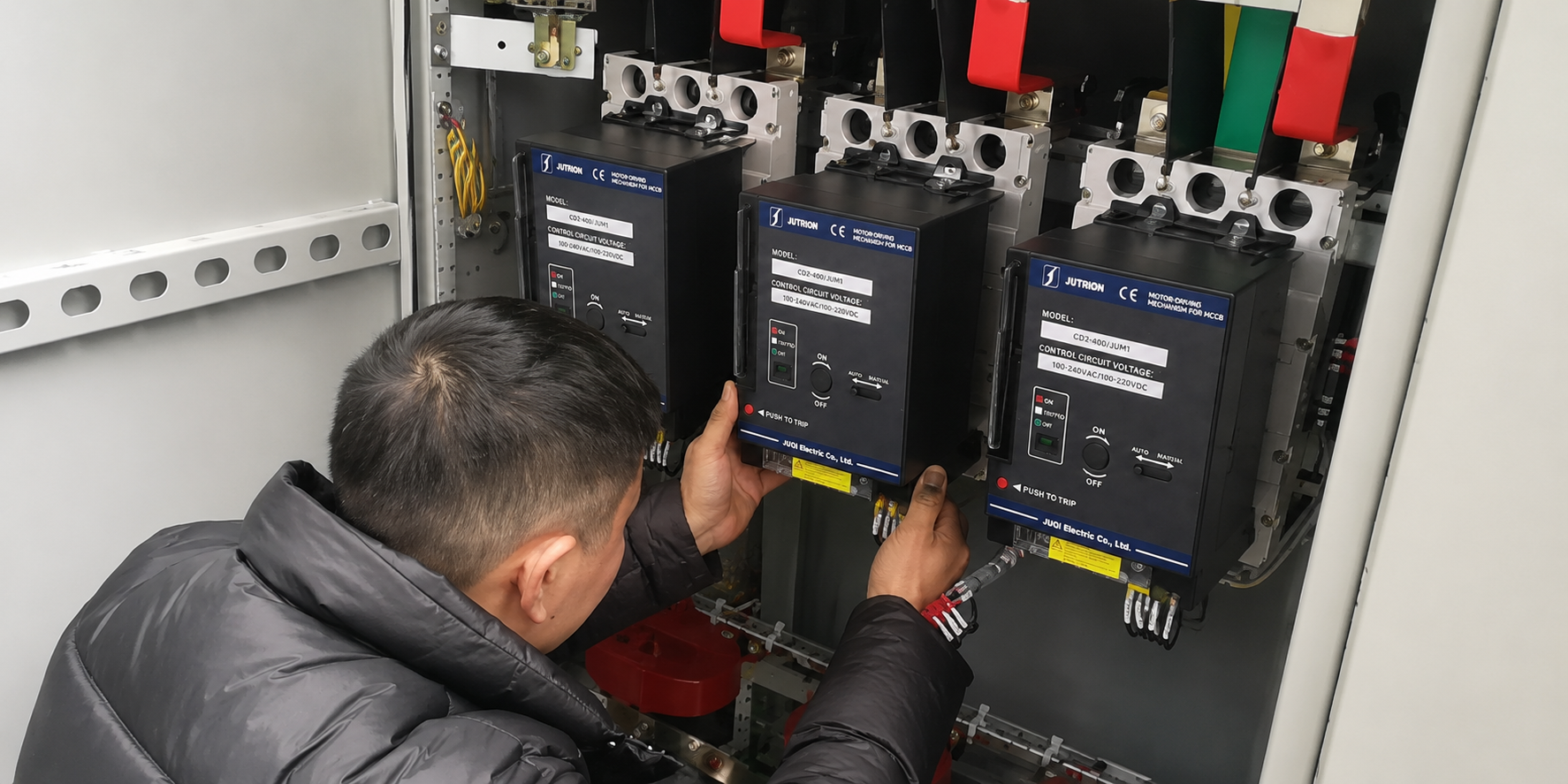
Figure 3: Real-world installation of JUTRION motorized operating mechanisms.
Common Mistakes When Reading MCCB Nameplate Ratings
In real technical consultations, I have found that even experienced technicians can easily make mistakes in the following areas:
- Only checking Icu while ignoring Ics:
- Many low-cost products may have an acceptable Icu rating, but a very low Ics rating. This means the breaker may be only for one-time protection. Once it trips under a severe fault, the entire device may need to be replaced, which can lead to higher long-term maintenance costs.
- Ignoring the Ics ratio:
- Many people think that having an Ics rating is enough, but they do not check the performance gap between Ics and Icu. Top-tier Ics performance (where Ics equals Icu) usually indicates better contact materials and a stronger arc-extinguishing design.
- Confusing MCCB, MCB, and ACB:
- MCCBs are used for higher current and industrial applications. Using an MCB in an industrial main circuit by mistake, or blindly choosing an expensive ACB where it is not required, can lead to safety risks or unnecessary budget waste.
- Ignoring the installation environment and upstream/downstream protection coordination:
- Not considering the enclosure, low-voltage panel height, and the tripping curve coordination between upstream and downstream breakers is a key reason for nuisance tripping.
Frequently Asked Questions about MCCB Ratings
If an MCCB trips under a short-circuit fault, can I always reset it and continue using it?
Not necessarily. If the fault current was close to the Icu (Ultimate Capacity), the internal contacts may be seriously burned, making the device unsafe for continued use. However, if the MCCB has a maximum Ics service rating, it is designed to remain fully functional after clearing the fault.
Is a higher Icu rating always better for my electrical system?
No, a higher Icu is not always better. Selection should be based on the actual prospective short-circuit current at the installation point. Choosing a 100kA MCCB where only 15kA is required is a serious waste of budget and may result in a larger physical footprint than necessary. Accuracy in [calculating short-circuit currents for MCCB selection] is key to a cost-effective design.
Do I need to worry about Icw for every MCCB in my building?
Generally, no. Icw is primarily important for main switches in distribution panels where selective protection is required. For branch circuits or final protection, Icu and Ics are usually sufficient. You only need to prioritize Icw when you need to ensure that a branch fault does not trip the main switch.
Conclusion:
Understanding Icu, Ics and Icw is essential for selecting the right MCCB in low-voltage distribution systems. Icu defines the maximum breaking limit, Ics reflects service reliability after fault interruption, and Icw becomes important when selective protection or short-time delay coordination is required.
For standard distribution panels, industrial control cabinets, OEM equipment or remote switching applications, JUTRION can provide MCCB solutions and compatible motorized operating mechanisms to support safer and more flexible low-voltage system design.
-
What Is a Surge Protective Device?
2025-10-29 11:05:09 -
How Can a Miniature Circuit Breaker Achieve Remote ON/OFF Control?
2025-12-29 11:05:09 -
How to Select the Right AC Contactor for Electrical Systems?
2026-01-29 20:26:49 -
What Is an Automatic Transfer Switch (ATS) and How to Select the Right One?
2025-11-02 11:05:09 -
Confused by Icu, Ics and Icw? A Complete Guide to Understanding MCCB Nameplate Ratings
2026-05-12 17:31:01